
The explosive growth of artificial intelligence, machine learning, and cloud computing has created unprecedented demand for high-density compute facilities. These modern data centers consume staggering amounts of electricity—often 50 to 100 megawatts or more—making power infrastructure the single most critical factor in site selection. While traditional commercial real estate focuses on location, accessibility, and labor markets, powering high-density compute close property to transmission infrastructure has become the primary determinant of feasibility and profitability.
The relationship between a data center and its power source isn’t merely about having enough electricity available. It’s about transmission efficiency, capital costs, grid reliability, and the complex interplay between utility infrastructure and operational requirements. Understanding optimal proximity to transmission lines can mean the difference between a viable project and a financial sinkhole.
This article examines the technical, economic, and strategic considerations that determine ideal distances between high-density compute facilities and transmission infrastructure.
Understanding Transmission Line Capacity and Voltage Levels
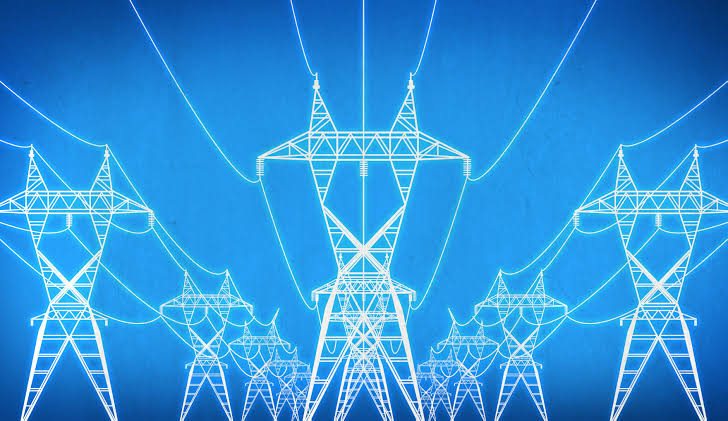
Transmission lines operate at different voltage levels, each serving distinct purposes in the electrical grid. High-voltage transmission lines—typically 115 kV, 230 kV, 345 kV, or 500 kV—carry bulk power across long distances with minimal losses. These lines form the backbone of regional power grids and represent the primary connection points for large-scale data centers.
The voltage level directly impacts how much power a line can deliver. A 230 kV line might carry 200-400 MW, while a 500 kV line can transmit over 1,000 MW. For hyperscale facilities requiring 100+ MW, direct access to high-voltage transmission becomes non-negotiable.
Lower-voltage distribution lines (69 kV and below) serve local areas but lack the capacity for high-density compute. Attempting to power a major data center from distribution infrastructure would require extensive upgrades, often proving economically unfeasible.
The Role of Substations in Power Delivery
Substations transform high-voltage transmission power down to usable levels. A data center rarely connects directly to transmission lines—instead, it ties into a substation that steps down voltage to 13.8 kV or 34.5 kV for distribution to the facility. The presence, capacity, and condition of nearby substations matter as much as the transmission lines themselves.
Optimal Distance: The Engineering Perspective
From a pure engineering standpoint, How close should a property be to a transmission line? The ideal answer is “as close as possible.” Every mile of distance introduces additional costs, technical challenges, and potential points of failure.
Properties within one mile of major transmission infrastructure offer significant advantages. At this proximity, interconnection costs remain manageable—typically $5-15 million for a 50-100 MW facility. The shorter the connection, the lower the material costs for conductors, fewer poles or underground conduits required, and reduced right-of-way negotiations.
Between one and three miles, projects remain viable but costs escalate. Expect interconnection expenses to increase by $2-5 million per mile. Utilities may require the data center operator to fund line extensions, transformer installations, and protection equipment. Environmental permitting for new transmission corridors adds time and uncertainty.
Beyond five miles, projects face steep economic hurdles. Long-distance power delivery requires substantial capital investment—often $20-50 million or more—and multi-year timelines for permitting and construction. Unless the site offers extraordinary advantages (tax incentives, fiber connectivity, water access), distant properties rarely make financial sense.
Transmission Loss Considerations
Electrical resistance causes power loss over distance, though this factor is often overstated. Modern high-voltage transmission loses roughly 1-2% per 100 miles. For distances under five miles, transmission losses are negligible compared to interconnection capital costs. The real concern isn’t efficiency loss—it’s the infrastructure investment required to bridge the gap.
Economic Factors Beyond Distance
Distance alone doesn’t tell the complete story. The capacity available on existing transmission infrastructure often matters more than raw proximity. A property adjacent to a fully subscribed transmission line offers no advantage if the grid cannot support additional load.
Utility service territories create invisible boundaries with major cost implications. Properties near transmission lines but outside the serving utility’s territory may face jurisdictional complications, requiring complex agreements between multiple utilities. This adds months or years to project timelines.
Regional wholesale electricity markets influence site economics. Areas with abundant low-cost generation—hydroelectric in the Pacific Northwest, wind in the Great Plains, natural gas in Texas—offer operational cost advantages that can offset higher interconnection expenses.
The Hidden Costs of Grid Upgrades
Utilities frequently require data center developers to fund system upgrades beyond the immediate interconnection. If a new 100 MW load would overload existing transformers, protection systems, or upstream transmission segments, the developer may face millions in upgrade costs regardless of proximity. Detailed interconnection studies—which can take 12-18 months—reveal these hidden expenses.
Power Reliability and Redundancy Requirements
High-density compute facilities demand exceptional reliability. What power does a data center need? Beyond capacity, the answer includes redundancy and uptime guarantees. Tier III and Tier IV data centers require multiple independent power feeds, typically from separate substations or transmission sources.
Properties near transmission intersections—where multiple high-voltage lines converge—offer natural redundancy advantages. These locations enable diverse power feeds from different directions, reducing vulnerability to single-point failures. A site with access to two substations on separate transmission paths can achieve true N+1 redundancy without extensive infrastructure investment.
Geographic diversity matters for disaster resilience. Transmission lines and substations in flood plains, wildfire zones, or areas prone to ice storms introduce risk regardless of proximity. The best sites balance closeness to infrastructure with environmental stability.
Backup Generation and On-Site Power
Despite proximity to robust transmission infrastructure, all mission-critical data centers maintain diesel or natural gas generators for backup power. These systems don’t eliminate the need for reliable grid connections—they provide bridge power during outages and maintenance windows. Sites with natural gas pipeline access can deploy more efficient combined-cycle generators, though this adds another infrastructure proximity consideration to the site selection equation.
Regulatory and Permitting Considerations
Transmission line proximity introduces regulatory complexity. Properties within designated transmission corridors may face land-use restrictions, easement requirements, or electromagnetic field (EMF) regulations. Some jurisdictions prohibit certain developments within specific distances of high-voltage lines, typically 50-200 feet depending on voltage level.
Environmental reviews for new transmission connections examine impacts on wetlands, endangered species, historical sites, and visual aesthetics. These studies can delay projects by 6-24 months. Properties requiring new transmission corridors through sensitive areas face heightened scrutiny and potential project-killing obstacles.
Utility interconnection queues have grown dramatically as data center development accelerates. Even ideal sites near ample transmission capacity may wait years for interconnection studies, approvals, and construction. Early engagement with utilities—ideally before property acquisition—has become essential for project success.
Strategic Site Selection Framework
Successful data center developers evaluate transmission proximity within a broader site selection framework. The optimal property balances multiple factors:
Power infrastructure: Within 1-3 miles of high-capacity transmission with available capacity and redundant feeds.
Network connectivity: Access to multiple fiber routes and internet exchange points.
Water availability: Cooling systems for high-density compute require 1-3 million gallons daily for evaporative cooling.
Incentives: Tax abatements, sales tax exemptions, and utility rate discounts can offset higher interconnection costs.
Labor market: Skilled technicians for 24/7 operations and maintenance.
Land characteristics: Flat, well-drained sites with minimal environmental constraints.
The best sites don’t necessarily offer the closest transmission proximity—they offer the best combination of factors that minimize total cost of ownership over the facility’s 15-20 year lifespan.
Frequently Asked Questions
What is considered “close” for data center power infrastructure?
Properties within one mile of major transmission lines and substations are considered optimal. Distances of 1-3 miles remain economically viable for large facilities, while anything beyond five miles typically requires extraordinary justification due to interconnection costs exceeding $30-50 million.
Can a data center be too close to transmission lines?
Yes. Properties immediately adjacent to high-voltage lines may face electromagnetic interference concerns, land-use restrictions, and safety setbacks. Most data centers maintain at least 100-300 feet of separation while keeping interconnection runs under one mile.
How long does transmission interconnection take?
Interconnection timelines vary dramatically by utility and project complexity. Simple connections to substations with available capacity may complete in 12-18 months. Complex projects requiring system upgrades or new transmission infrastructure can take 3-5 years from application to energization.
What voltage level should data centers target?
Facilities requiring 50+ MW should target direct access to transmission lines at 115 kV or higher. Smaller facilities (10-30 MW) may successfully operate from subtransmission systems at 69 kV. Distribution-level connections (34.5 kV and below) cannot economically support high-density compute.
Do renewable energy sources affect proximity requirements?
Increasingly, yes. Data centers pursuing 24/7 carbon-free energy may prioritize proximity to wind farms, solar arrays, or hydroelectric facilities. However, this adds complexity—the site must balance renewable generation access with reliable grid connectivity for periods when renewable sources are unavailable.
How do utility service territories impact site selection?
Utility boundaries create hard constraints. Properties on the edge of service territories may face jurisdictional disputes, requiring agreements between multiple utilities. These complications add 6-18 months to project timelines and introduce regulatory uncertainty that can derail projects.
Conclusion
The question of how close a property should be to transmission infrastructure has no universal answer—it depends on facility size, power requirements, budget constraints, and regional grid characteristics. However, clear patterns emerge from successful projects: proximity matters enormously, with properties within one mile of high-capacity transmission infrastructure offering the most favorable economics and fastest deployment timelines.
As AI and high-performance computing push power densities higher, the relationship between data centers and transmission infrastructure will only intensify. Future facilities may require dedicated transmission connections, on-site substations, and even co-location with power generation assets. Site selection has evolved from a real estate decision to an energy infrastructure strategy. Developers who understand the complex interplay between proximity, capacity, reliability, and cost will secure the competitive sites that enable the next generation of high-density compute.









Most Commented