
True strength isn’t just about lifting heavy weights. It’s about creating a resilient, balanced, and functional body capable of handling diverse demands. A holistic approach that pairs foundational movements with targeted isolation exercises yields the most sustainable results. This means integrating compound lifts with precise accessory work to address muscular imbalances and enhance overall athleticism.
Building total body strength requires a strategy that works from the center outward. A powerful core stabilizes every movement, from a heavy squat to a simple walk. Conversely, developing strong, stable shoulders—often through overlooked movements—improves posture, joint health, and the capacity to push, pull, and carry. This article explores how to effectively combine these two critical elements: mastering the nuanced technique of shoulder development exercises and executing core workouts that build real, usable strength.
The Philosophy of Integrated Strength Training
The goal of total-body development is functional harmony. Muscles should not be trained in isolation with the sole aim of appearance; they should be developed to support each other. When your shoulder girdle is weak, your ability to perform overhead presses or even carry groceries suffers. When your core is underdeveloped, your power in leg exercises and stability in upper-body movements diminishes.
This integrated philosophy moves away from training “muscle groups” on designated days and toward training movement patterns that engage multiple systems simultaneously. It prioritizes exercises that teach your body to work as a coordinated unit. A well-designed program will include movements that build raw power (like squats and deadlifts), exercises that develop stability and joint integrity (like targeted shoulder and core work), and activities that enhance mobility and recovery.
The Critical Role of Shoulder Stability and Development
Strong shoulders are foundational to upper-body strength and overall posture. Many training programs focus heavily on the anterior deltoids through pressing movements, leaving the medial and posterior heads underdeveloped. This imbalance can lead to poor shoulder mechanics, increased risk of impingement, and a compromised ability to perform daily and athletic tasks.
Developing the shoulder complex involves more than just adding weight to a bar. It requires attention to the smaller stabilizing muscles—the rotator cuff—and balanced development of all three deltoid heads. Exercises that target the often-neglected lateral and posterior deltoids are essential for creating a shoulder that is both strong and resilient. Proper form in these movements is non-negotiable, as the shoulder joint is highly mobile and therefore vulnerable.
Why Lateral Raises Matter for Total Strength
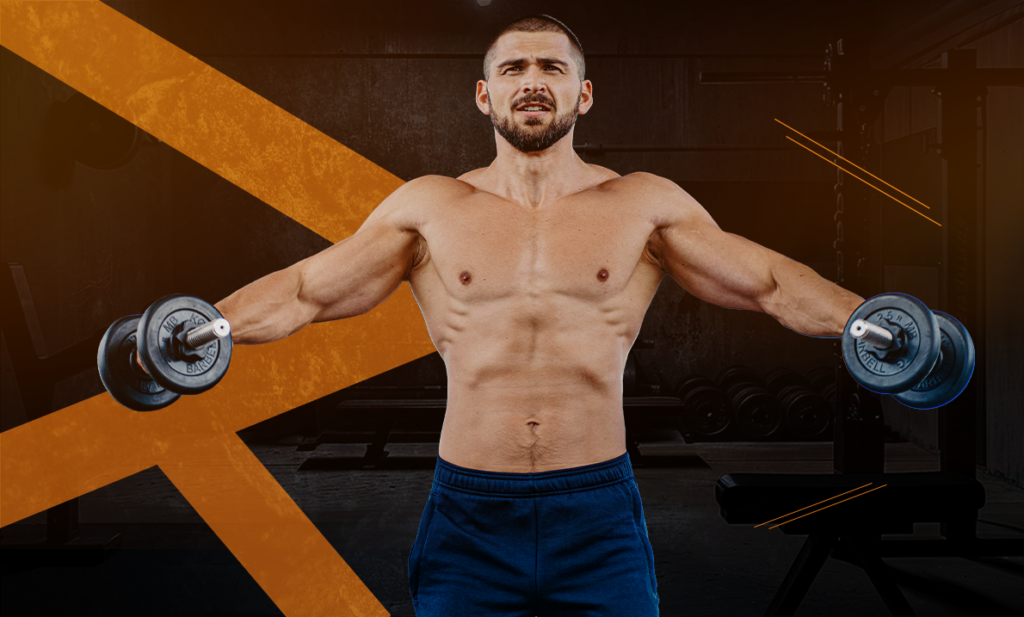
The lateral raise is a quintessential exercise for building the medial deltoid. While it is an isolation movement, its benefits are profoundly functional. Strong medial deltoids contribute to a wider, more stable shoulder capsule, improving the biomechanics of all overhead and pushing activities. They are crucial for maintaining proper posture, countering the forward pull created by heavy chest and anterior deltoid training.
Executing lateral raises with precision is a skill. The focus should be on controlled movement and muscle engagement, not on lifting the heaviest possible dumbbell. Using moderate weight with perfect form—initiating the movement with the elbows, avoiding shrugging the traps, and maintaining a slight forward lean to target the medial head effectively—builds strength without compromising joint health. Integrating this movement into your regimen corrects imbalances and fortifies the shoulder for compound lifts.
Building a Foundation with Functional Core Strength
The core is your body’s central pillar. It transfers force between the upper and lower body, stabilizes the spine during load-bearing activities, and is essential for balance and coordination. “Core training” has often been misrepresented as endless crunches for aesthetic purposes, but functional core strength is different. It is about developing the entire musculature—the rectus abdominis, obliques, transverse abdominis, and the deeper spinal stabilizers—to act as a unified, powerful stabilizer.
Effective training targets these muscles in the ways they are actually used: resisting rotation, preventing extension, and stabilizing under load. When your core is strong in this functional sense, your squats become more powerful, your running posture improves, and your risk of lower-back injury decreases significantly. The core should be trained with intention, much like any other primary muscle group.
Principles of Effective Abdominal Training
To build a core that contributes to total body strength, adhere to these principles:
- Train for Stability First: Prioritize exercises that challenge your core to resist movement, such as planks, Pallof presses, and dead bugs, before focusing on dynamic movements that create movement like crunches.
- Integrate Anti-Rotation: Incorporate exercises like cable or band resisted chops and lifts. These teach the obliques and deep stabilizers to prevent the spine from twisting under force, a common real-world demand.
- Progress Appropriately: Just as you add weight to a squat, you should progress your core work. Move from a standard plank to a weighted plank, from a dead bug to a suitcase carry, increasing the challenge as your strength improves.
A well-structured program should include a variety of these movements. For a comprehensive guide on implementing these principles, exploring ab workouts that prioritize function over fatigue can provide a clear roadmap.
Programming for Synergistic Strength Gains
The ultimate test of these concepts is their application in a coherent weekly plan. The key is to place exercises strategically so they complement each other without causing undue fatigue that hampers performance in primary lifts.
A sample framework for a twice-a-week upper-body/full-body focus could look like this:
- Day 1 (Upper Focus): Primary compound movement (e.g., Overhead Press), followed by accessory pulling work. Then, include lateral raises (3 sets of 12-15 reps, controlled tempo) at the end of the session. Finish with a core stability block (e.g., 3 sets of 45-second weighted plank).
- Day 2 (Full Body): Primary compound lower-body movement (e.g., Squats), followed by horizontal pushing. Then, dedicate time to functional core work, such as 3 sets of 10-12 reps on anti-rotation cable chops. This places more dynamic core work on a day where the lower body is already primed.
This structure ensures shoulder and core development are addressed without interfering with the performance of your main strength-building lifts. The lighter, higher-rep nature of the lateral raise and the stability-focused core work serve as perfect complements to the heavier, lower-rep compound movements.
Avoiding Common Pitfalls in Pursuit of Balance
Two major pitfalls can derail progress toward balanced strength: overemphasizing vanity muscles and neglecting proper recovery.
First, chasing only the “mirror muscles”—the chest and anterior shoulders—while ignoring the posterior chain (rear delts, back, glutes) and deep core leads to imbalance. This not only limits performance but increases injury risk. Your program must have a pull-to-push ratio that favors pulls (to counteract our modern forward-leaning posture) and must include the targeted shoulder and core work discussed.
Second, these smaller stabilizing muscles are often worked with higher repetitions and require quality recovery. Unlike large muscle groups, they can be easily overtrained with daily high-volume work. Allow at least 48 hours between targeted sessions for the deltoids and core, and prioritize sleep and nutrition to ensure these tissues repair and strengthen.
Frequently Asked Questions
Can I build total body strength without heavy compound lifts?
While isolation exercises like lateral raises and core work are vital for balance and joint health, the foundation of total-body strength is built through heavy compound movements—squats, deadlifts, presses, and pulls. These lifts stimulate the greatest hormonal response, build the most muscle mass, and enhance functional capacity across all systems. The accessory work optimizes the performance and safety of these primary lifts.
How often should I train my shoulders and abs?
For most individuals training 3-4 days per week, direct shoulder work (like lateral raises) and focused core training can be effectively included 2 times per week. This frequency allows for sufficient stimulus without overtaxing these smaller, often-used muscle groups. They can be added at the end of sessions dedicated to larger compound movements.
Why do my shoulders hurt during lateral raises?
Pain typically indicates improper form or an existing imbalance. Common errors include using too much weight, initiating the movement with a shrug (engaging traps instead of delts), or swinging the dumbbells. Reduce the weight, focus on leading with the elbows, and maintain a slight forward lean. If pain persists, consult a professional to assess potential rotator cuff or impingement issues.
Are crunches useless for functional strength?
Crunches are not useless, but they are limited. They primarily target the rectus abdominis in a single plane of motion (flexion). For true functional core strength that stabilizes the spine under load, exercises that resist motion (like planks) or resist rotation (like Pallof presses) are far more valuable. Crunches can be a small part of a program, but they should not be the cornerstone.
How do I know if my core is strong enough?
Functional core strength is demonstrated through performance, not just appearance. Signs include: maintaining a neutral spine during heavy squats or deadlifts, no lower-back fatigue after long periods of standing or sitting, and the ability to perform anti-rotation exercises (like suitcase carries) with control. If you can hold a strict plank for over 60 seconds with perfect form, you have a good baseline of stability.
Conclusion
Building total body strength is an engineering project. It requires a strong foundation (a resilient core), balanced supports (stable, well-developed shoulders), and the primary load-bearing structures (muscles built through compound lifts). Mastering precise movements like lateral raises ensures your shoulder development is balanced and healthy, while implementing functional ab workouts builds a core that actively supports every other physical endeavor.
When these elements are programmed synergistically, the result is a body that is not only stronger but also more capable, resilient, and balanced. This approach transcends aesthetic goals, creating a physique that performs reliably in the gym, in sport, and in daily life. The pursuit of total-body strength, therefore, is best viewed as the pursuit of total-body function.

Most Commented