
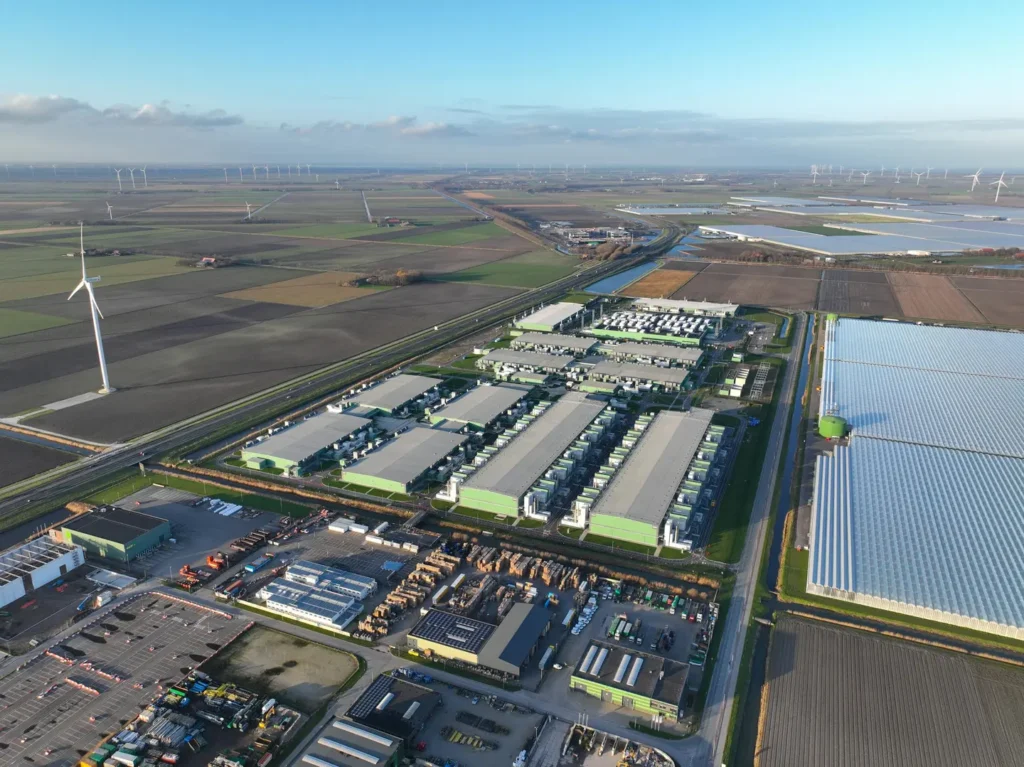
The explosion of cloud computing, artificial intelligence, and streaming services has created unprecedented demand for data center facilities. Property owners sitting on land near major metropolitan areas or along fiber routes often wonder whether their parcels might command premium prices from data center developers. Understanding what drives data center site value requires examining the specific technical, logistical, and regulatory factors that separate ordinary real estate from mission-critical infrastructure sites.
Data center developers don’t evaluate land the same way residential or commercial buyers do. They’re hunting for rare combinations of attributes that can support power-hungry facilities requiring 99.999% uptime. A parcel that looks unremarkable to most buyers might be worth millions to the right data center operator—or conversely, prime real estate in a desirable location might hold zero value if it lacks critical infrastructure access.
This article breaks down the key factors that determine whether your land commands premium pricing in the data center market and what specific characteristics developers prioritize when selecting sites.
Power Availability: The Primary Value Driver
Electrical capacity represents the single most critical factor in data center site selection. Modern hyperscale facilities can consume 50-100 megawatts or more—equivalent to powering a small city. Without access to substantial electrical infrastructure, land holds minimal value to data center operators regardless of other attributes.
Developers evaluate several power-related criteria. Proximity to electrical substations matters significantly, as extending high-voltage transmission lines costs $1-3 million per mile. The local utility’s ability to deliver multi-megawatt loads within reasonable timeframes separates viable sites from non-starters. Some regions face years-long waitlists for new power capacity, making existing allocations extremely valuable.
Power reliability also drives value. Sites served by multiple substations or redundant transmission paths command premiums because they enable facilities to achieve higher uptime guarantees. Land near generation sources—particularly renewable energy facilities—has gained value as operators pursue sustainability goals and power purchase agreements.
The cost per kilowatt-hour in your region directly impacts operational economics. States with industrial electricity rates below 6 cents per kWh attract significantly more data center investment than high-cost markets. Your land’s value correlates strongly with the local utility’s rate structure and capacity to serve large loads.
Fiber Connectivity and Network Infrastructure
Data centers exist to move information, making fiber optic connectivity the second pillar of site value. Parcels located along major fiber routes or within carrier-dense areas command substantial premiums over similarly-sized properties lacking network infrastructure.
Fiber Route Proximity
Land within one mile of existing fiber infrastructure holds considerably more value than sites requiring new fiber builds. Extending fiber routes costs $50,000-150,000 per mile depending on terrain and permitting requirements. Properties with multiple fiber providers already present offer redundancy that enterprise customers demand.
Network Latency Considerations
For certain data center types, geographic positioning relative to major population centers determines viability. Edge data centers serving low-latency applications must sit within specific distances of user populations. Conversely, hyperscale facilities focused on storage and batch processing can locate in more remote areas if power and fiber access exist.
Properties positioned at the intersection of major fiber routes—particularly transcontinental or international cables—hold exceptional value. These “meet-me” locations enable efficient data exchange between networks, creating natural clustering effects that further enhance site desirability.
Site Size and Development Potential
Data center campuses require substantial acreage. While a single building might occupy 10-20 acres including parking and utilities, developers seek 50-200+ acre sites that accommodate multi-phase expansion. Land that supports campus-style development commands higher per-acre pricing than smaller parcels.
Topography influences development costs significantly. Flat or gently sloping sites minimize grading and foundation expenses. Properties requiring extensive earthwork, wetland mitigation, or specialized engineering see reduced values. Soil conditions matter too—stable soils that support heavy equipment loads without expensive foundation systems add value.
Clear title with minimal encumbrances streamlines transactions. Properties with complex ownership structures, easements restricting development, or environmental contamination see discounted valuations. Developers prefer clean parcels that move quickly through due diligence without surprises.
Zoning and Regulatory Environment
Local zoning determines whether data center development is permitted by right, conditional, or prohibited entirely. Land zoned for industrial or technology park uses typically holds more value than agricultural or residential parcels requiring rezoning. The time and uncertainty involved in securing approvals directly impacts what developers will pay.
Some jurisdictions actively court data center investment through tax incentives, expedited permitting, and favorable utility rates. Properties in these business-friendly environments command premiums. Conversely, communities with restrictive noise ordinances, appearance standards, or opposition to industrial development see depressed land values for data center purposes.
Water availability for cooling systems represents another regulatory consideration. Many jurisdictions restrict water-intensive uses, particularly in drought-prone regions. Sites with adequate water rights or access to alternative cooling solutions (air-cooled systems, recycled water) maintain higher values.
Market Dynamics and Location Factors
Understanding what is my land worth to a data center requires recognizing that data center markets operate in tiers. Primary markets—Northern Virginia, Silicon Valley, Phoenix, Dallas—see intense competition for scarce sites. Secondary markets with emerging infrastructure offer opportunities as primary markets saturate.
Proximity to existing data center clusters creates network effects. Once several facilities establish in an area, additional developments follow as enterprises seek to interconnect systems across providers. Land near established data center parks often appreciates significantly as the ecosystem matures.
Natural disaster risk influences site selection. Properties in seismically stable regions away from flood zones, tornado alleys, and hurricane paths command premiums. Developers model risk across decades of facility operation, making geological and meteorological stability meaningful value factors.
Transportation access, while less critical than for distribution centers, still matters. Sites near major highways facilitate equipment delivery and staff access. Proximity to airports benefits facilities requiring frequent maintenance visits or rapid hardware replacements.
Frequently Asked Questions
How much do data centers typically pay for land?
Data center land values vary dramatically by market and attributes. Prime sites in established markets can command $500,000-2,000,000+ per acre, while secondary market properties with good infrastructure might sell for $100,000-400,000 per acre. Raw land lacking power and fiber holds minimal data center value regardless of location.
What size property do data centers need?
Most modern data centers seek 50-200 acres for campus-style development, though smaller edge facilities might use 10-30 acres. Developers prefer larger parcels that accommodate multi-phase expansion over 10-20 years. Smaller properties can still attract interest for specific use cases but typically command lower per-acre pricing.
Can residential or agricultural land be converted for data center use?
Yes, but rezoning requirements add time, cost, and uncertainty that reduce land value. Properties already zoned for industrial or technology uses command premiums. The feasibility of conversion depends heavily on local government attitudes toward data center development and community acceptance of industrial facilities.
How long does it take to develop a data center site?
From land acquisition to operational facility typically requires 18-36 months, though permitting in difficult jurisdictions can extend timelines significantly. Sites with existing power allocations, fiber access, and favorable zoning move faster. Developers value sites that reduce time-to-market, as delays cost millions in lost revenue.
Do data centers prefer to buy or lease land?
Most data center operators prefer purchasing land for facilities representing long-term infrastructure investments. Ground leases occasionally work for smaller edge facilities or build-to-suit arrangements, but the capital-intensive nature of data center construction favors ownership. Sale-leaseback arrangements sometimes occur post-construction for financial optimization.
What makes land more valuable to hyperscale versus colocation data centers?
Hyperscale operators (cloud providers, tech giants) prioritize power capacity and cost above all else, often accepting more remote locations if electrical infrastructure exists. Colocation providers need proximity to enterprise customers and fiber-dense areas, making location within or near metro areas essential despite higher land costs.
Conclusion
Determining your land’s worth to data center developers requires honest assessment of power infrastructure, fiber connectivity, site characteristics, and regulatory environment. Properties commanding premium prices possess rare combinations of attributes that can’t be easily replicated—particularly substantial electrical capacity and network infrastructure access. Location matters, but not in traditional real estate ways; a rural site with excellent power and fiber can outvalue prime commercial real estate lacking critical infrastructure.
The data center market continues evolving as artificial intelligence, edge computing, and cloud services drive capacity demands. Property owners who understand what developers need—and can articulate how their sites meet those requirements—position themselves to capture maximum value. Whether your land becomes the next hyperscale campus or remains better suited for other uses depends on these specific, measurable factors that separate ordinary parcels from mission-critical infrastructure sites.










Most Commented